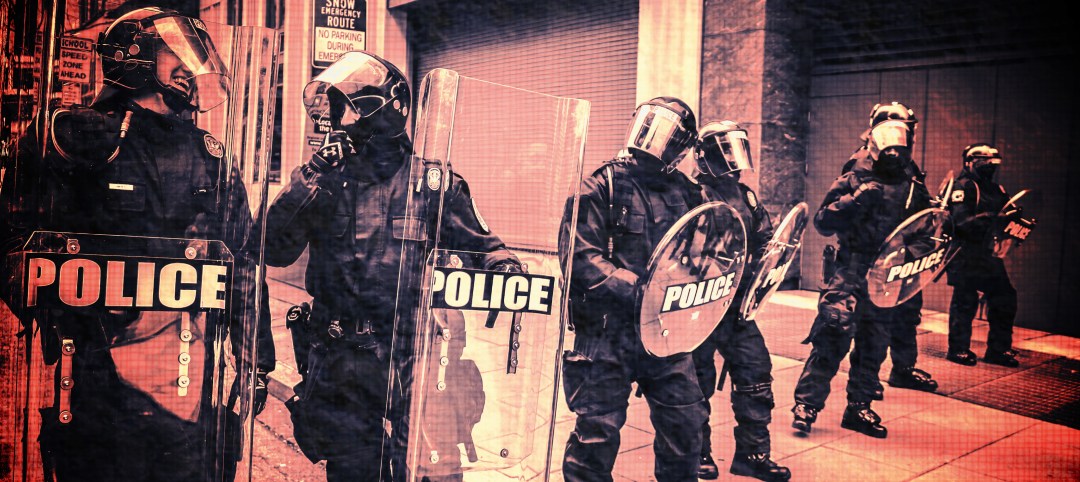
The horrific death of George Floyd has prompted massive protests and civil action. Hopefully it also forces us to rethink what exactly a police department is, and what it’s mission should be. There is a movement to defund the police. I think we also need to talk about demilitarizing the police. We often talk about the militarization of the police in terms of equipment – flak jackets, armored vehicles, etc – and these are rightfully concerning, but I want to talk about the military focus of its people.
 The other element to this military focus of police is about training and hiring practices. A sizable portion of police officers are military veterans. According to a Military Times law enforcement survey from 2017, 1 of every 5 sworn officers had served in the military. 70% of law enforcement agencies attended military job fairs, and half of the departments gave hiring preference to veterans. This is the second thing that should probably change. I don’t mean to disparage military veterans – I happen to be one – and I think lots of employers should give an edge to veterans in consideration for their service. I just don’t think police departments should be in that group. It may seem counter-intuitive, but that is exactly the point. Allow me to elaborate
Policing a civilian population is a peace keeping mission. Military forces are terrible at peace keeping. The military trains for war, not peace. We never want to admit it, but the primary function of the military is to kill people. War is about inflicting casualties on your enemy. You win a war by pounding your foe into submission; you do this by killing enough of them to get the rest to surrender. That is how we fight wars. That is how we train soldiers. At the core of military training is a dehumanization process. They even call it “basic training“. New recruits have their heads shaved, uniforms issued, and most of their basic rights are removed. During the next few months, they are repeatedly abused, both physically and mentally. They are treated as less than human, and told as much in no uncertain terms. A drill sergeant will tell you that new soldiers need to be broken down and then built back up. We are aware of this process. We’ve seen it played out in countless movies and TV shows. We accept that this is necessary in order to “toughen” the soldier. Being a soldier is grueling work. Fighting wars is stressful and unrelenting. Basic training hardens the soldier for the tough work to be done. And it bears repeating that the work to be done is: killing human beings.
 Most people are not prone to killing. It is the last thing any mentally stable human would want to do. Army commanders understand this, and thus it is imperative, for operational purposes, that this human instinct must be undercut, if not removed entirely. Much of what goes on during military training mirrors the tactics used during an interrogation. There is severe sleep deprivation, physical activity designed to inflict pain, psychological head games whose sole function is to frustrate and demoralize. All of these things are meant to damage the human spirit, with the ultimate goal of subjugation, which leads to cooperation. If you want a captured spy to turn against his comrades, turn against his homeland, turn against his family, you torture them until you have crushed their intrinsic will to protect those they care about. To get the average 18 year old off the street to point a rifle at a nameless stranger and pull the trigger, you don’t have to go quite as far, but you do need to mess up that part of their psyche that decides right from wrong.

You also need to fill a soldier with a degree of anger. It is no different than how we train dogs to fight. Talk to any decent person who owns a pit bull, or a rottweiler, and they will tell you their dog is a sweetheart who wants nothing more than to cuddle on your lap. Dogs used in underground fighting rings are the same breed, but those dogs have been purposefully abused to make them mean and aggressive. They have been chained, beaten, and starved to create a viciousness that allows them to kill. Basic training for soldiers is not quite as severe, but the results are similar, and intended. If you are the owner of a fighting dog, when you place the animal in the ring, you want it to attack, instinctively, without hesitation. If you are a military General, you expect the same of your troops when they get to the battlefield. This is the uncomfortable truth about military training. We talk about training good soldiers, about making them strong, but we rarely like to admit we are talking about the “strength” to kill without conscience
This is why we need to rethink how we go about hiring police officers. You wouldn’t take a pit bull out of the fighting ring, and send it to a hospital to be a therapy dog. Then why do we think it is such a great idea to take soldiers, trained for the task of war, and send them out on civilian streets to interact with community members? Why are we surprised when they act overly aggressive? How do we expect them to respond with anything other than violence, when they spent years being taught specifically to use violence? The core dehumanization that takes place in the military runs deep, and is not easy to undo.
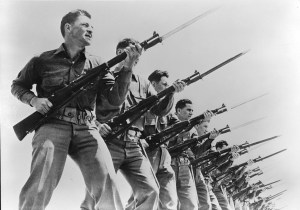
We love to fetishize military service. We love to call our soldiers heroes. But what we don’t like to think about is that their heroism often involves brutal acts of destruction and death – and that type of heroism requires a certain loss of compassion. We proudly talk about our ancestors who fought the Nazis, but we could never live with the image of Grandpa jamming a bayonet in the throat of a 25 year old shopkeeper from Hamburg. We say we are proud of our cousin in the Marines, but we also didn’t witness him fire a rocket into an Afghan apartment building that may have housed school children as well as Al Qaeda. Military service sometimes requires the ability to at least “turn off” our humanity, which is not a very practical skill in the civilized world.
By contrast, policing a society is to be knee deep in humanity. Officers should be able to interact with a broad cross section of people. Communication skills are essential. The ability to problem solve on the fly, to be flexible in complex situations, these are traits we should look for when hiring police officers. The military actively discourages all these things. Soldiers aren’t supposed to talk, they are told to shut-up and follow orders. Soldiers are not supposed to think, they are not allowed to be flexible, creative problem solving is a punishable offense. Soldiers are encouraged to shoot first, ask questions later. I cannot think of a worse training ground for police than the military.
Not every cop in uniform is a veteran, of course, and certainly not every cop who uses excessive force has a military background. Or do they? I’m sure most of the training regimens at police academies were put into place by ex-military personnel. I will bet just about every cop who has ever put on a uniform was trained at some point by a military veteran, or they had a supervisor, or partner, who was a military veteran. Nearly every single law enforcement agency surveyed by the Military Times reported having military veterans in senior leadership positions. It is natural that, whenever we transition from the role of student to teacher, we adopt the same methods that were used to teach us. What other possible way could we do it? If our parents taught us to eat peas with a fork, we will show our children the same way. If you feel your drill sergeant made you tough by screaming insults at you while you scrubbed the floor with a tooth brush, then when you have a batch of fresh recruits you will mimic that behavior. And if you feel the kill-or-be-killed attitude you developed in the service helped you be a survivor, you will do your best to create that mentality in your class at the police academy.
Child abuse is a systemic problem because it gets normalized and passed down from one generation to the next. Bigotry and misogyny work the same way, as do most of our social ills. They are learned behaviors that keep getting taught to the next wave, and it just keeps going until some adult stands up and says: what my parents did was wrong and I will not do it to my children. That is how we break the cycle. Police departments must be willing to take the same stand. They must be bold and say: we’ve been doing this all wrong for generations and it ends here.
Military culture permeates police departments all over the country. Of course it does. We assume solders are well suited to be police because they are used to high stress situations and they have weapons training. These may be useful assets for a cop, however, they can come at a cost: diminished compassion, moral ambiguity, and compromised anger management. These traits were intentionally cultivated in these individuals. To what level they took hold, and how long they will remain, will vary greatly in each person, but the process happened or they wouldn’t have made it out of basic training. Is that cost worth it? I would pose the notion that it is easier to train a well-adjusted person how to handle a firearm, than it is to foster self-control in someone who was purposefully subjected to prolonged abuse to make them aggressive.
I’m not saying military service should disqualify anyone from joining the police, but it shouldn’t be considered a leg up either. Perhaps there needs to be separate paths for veterans and civilians? Civilians entering the police academy could spend extra time at the obstacle course and shooting range, while the ex-military cadets could focus on more cerebral aspects of the job, such as conflict resolution. More importantly, we need to focus on those military mindsets that are detrimental, and have been ingrained in police philosophy, and remove them with unwavering conviction. There should be zero tolerance for promoting aggressiveness, or glorifying the use of force. Anyone adopting an “us against them” mentality should be reprimanded. And, obviously, axioms like “shoot first, ask questions later” should be eradicated from the vocabulary. We need to stop treating neighborhoods as battle zones. A good step toward achieving that goal is to stop perpetuating the notion of police officers as soldiers.
#BlackLivesMatter #DefundThePolice #DemilitarizeThePolice
——— Photo Credits ——

 3am Cynic